
September 3, 2026
What actually happens to a trail at Okemo after two days of November rain? Anyone who has skied here long enough already knows the answer: crews spend the next cold snap just trying to get back to where they started. A warm spell melts a base that took a week to build, and the mountain spends its next good window rebuilding instead of expanding. That cycle has shaped early season at Okemo for as long as most locals can remember.
This year the resort is trying to break it. Not with a bigger snowmaking system in the abstract sense, but with a specific set of hardware changes that target the exact problem: how fast the mountain can respond when a short, imperfect weather window opens, and how much of that window it can actually use.
Okemo has been running this project through the summer and into fall, and the pieces are specific enough to name:
None of that reads like a headline on its own. Together, it is the largest snowmaking investment in Okemo's history, and it is worth understanding mechanically, because the mechanics are what actually change a ski day.
A valve house is the control point for a snowmaking system. It houses the manifolds and charge valves that manage compressed air and high-pressure water on their way to the guns. Okemo had been operating three separate summit valve houses, which meant that adjusting snowmaking near the top of the mountain meant physically moving between three structures.
The new consolidated house doubles up on charge valves and adds higher-pressure valving in one location. That sounds like a maintenance detail. It isn't. When a cold window is four hours long instead of four days, the time a crew spends walking between buildings is time that window is closing. One house instead of three means faster response, and faster response is the entire point of a system built to chase short windows rather than wait for sustained cold.
Here is the number that actually explains what changes for skiers. Okemo's upgraded system can make snow in temperatures up to about 28 degrees Fahrenheit, which resort officials describe as creating significantly more snowmaking opportunities.
That matters because of how a typical late-November day in the Okemo Valley actually behaves. Daytime highs often sit in the high 20s to mid 30s, with the coldest air arriving in a narrow band overnight. A system that only performs well well below freezing can only run during a fraction of those hours. A system that can hold quality at 28 degrees captures meaningfully more of the same day, not because the weather changed, but because the equipment's usable range widened.
This is the piece that gets lost when a project gets summarized as "new snowmaking equipment." The upgrade isn't primarily about making more snow when it's already cold. It's about making usable snow during the hours that used to sit just outside the system's range, which is exactly when a marginal November stretch either builds a base or wastes another week.
Vail Resorts has called the diesel-to-electric compressor swap its single largest emissions-reduction opportunity of the year, and the sustainability case is real: replacing those fifteen diesel units with two electric compressors is expected to eliminate about 250,000 gallons of diesel fuel consumption annually.
But the operational reason the swap matters to skiers has less to do with emissions and more to do with response speed. Electric compressors start, stop, and adjust output faster than diesel units, and that pairs directly with the nine new variable frequency drive motors added to the pump station. VFD motors let the pump station match output to actual demand instead of running at one fixed level. Put those two changes together and the system isn't just cleaner. It's more responsive to exactly the kind of short, changeable window a New England shoulder season throws at a mountain.
A project this size doesn't stay inside the resort's fence line. Okemo has publicly thanked the town of Ludlow, Ludlow Electric, Efficiency Vermont, and the Vermont Public Power Supply Authority as partners on the upgrade. Swapping fifteen diesel compressors for electric units at mountain scale means coordinating with the utility that actually serves Ludlow, which is a detail easy to miss in a story that otherwise reads as pure mountain operations. The resort's biggest capital project this year runs through the same electric infrastructure that powers the rest of town.
Resort leadership has been fairly direct about what they expect this to look like on the ground. General Manager Bruce Schmidt put it plainly when the project was still under construction:
"They're going to see expanded terrain. I'd like to feel that we're going to put in our terrain parks potentially earlier, more features and I'm really just excited about being able to recover from weather events. We do get them sometimes."
Snowmaking Manager Charles Hibberd, describing the same project after 25 years in the business, framed the effect on an average ski day this way: the mountain should be able to open trails earlier and get back on them quicker after any weather episode. Senior Snow Surface Manager Greg Cartier, who oversees grooming and the terrain park alongside snowmaking, confirmed the project was on schedule and meeting its deadlines as of late July, with installation of the HKD guns still underway heading into fall.
For someone who already skis here, that translates into a few concrete things worth watching once the season opens: whether certain trails come online earlier than in past years, whether terrain park features show up sooner, and most importantly, how quickly the mountain looks normal again after the first real rain or warm spell of the season. That last one is the actual test of everything described above.
Okemo has done this before, in the sense that big infrastructure jumps aren't new to this mountain. The Muellers added the resort's first triple chairlift and first detachable quad in 1992, along with a new summit lodge. The Sunburst Express, a six-pack high-speed lift, arrived in 2014. Ahead of the 2021-22 season, Okemo added the Quantum Six and the Evergreen Summit Express, both high-speed lifts built to move skiers around the mountain faster. This year's snowmaking overhaul fits that same pattern of periodic, specific, named investment rather than year-over-year incrementalism, and it comes in the season immediately following Okemo's 70th year of operation since it first opened in January 1956.
None of this is a reason to buy or sell anything. It's simply what changed on the mountain this year, and why it matters more than the dollar figure attached to it suggests. For those of us who track this valley closely, from trail conditions to town infrastructure to the rhythms of the ski season, these are the kinds of details that separate a headline from an understanding of the place.
That kind of close, ongoing attention to the Okemo Valley is exactly what Mary W Davis Realtor & Associates has built its reputation on since 1958. Whether you're already living here or simply keeping an eye on the mountain from afar, Talk to an Okemo Real Estate Expert whenever local knowledge is useful to you.
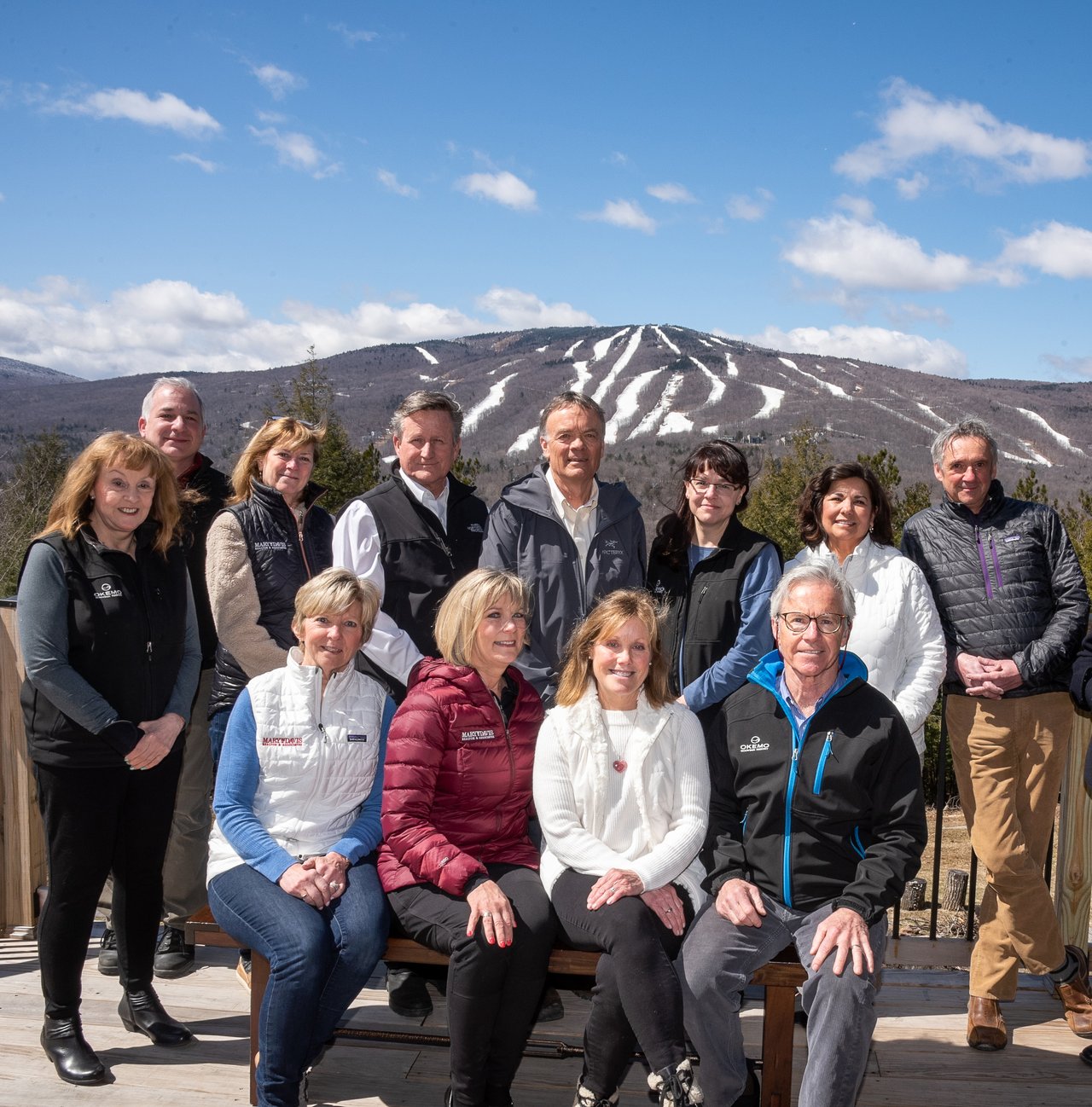
We are the Okemo Valley's leading real estate source. Our talented sales team is knowledgeable about the local real estate market. We take great pride in working closely with buyers and sellers - providing a wealth of knowledge, guidance and support throughout the process.

Okemo Valley Real Estate

We pride ourselves in providing personalized solutions that bring our clients closer to their dream properties and enhance their long-term wealth. Contact us today to find out how we can be of assistance to you!
MARY W DAVIS REALTOR® & ASSOCIATES
213 Main St Ste 3 Ludlow VT 05149